

Energy and Environment
Context on Energy Demand, Energy Production, Climate Change, & The Solution: Clean Energy
Energy and the Climate
Our climate is a powerful collaboration between the sun, our atmosphere, and the oceans. While solar activity provides the energy that drives our weather and waves, the delicate balance of Earth’s natural systems regulates our 'global thermostat.' Human activity has been altering Earth’s balance and pushing its temperature setting to unsafe levels.
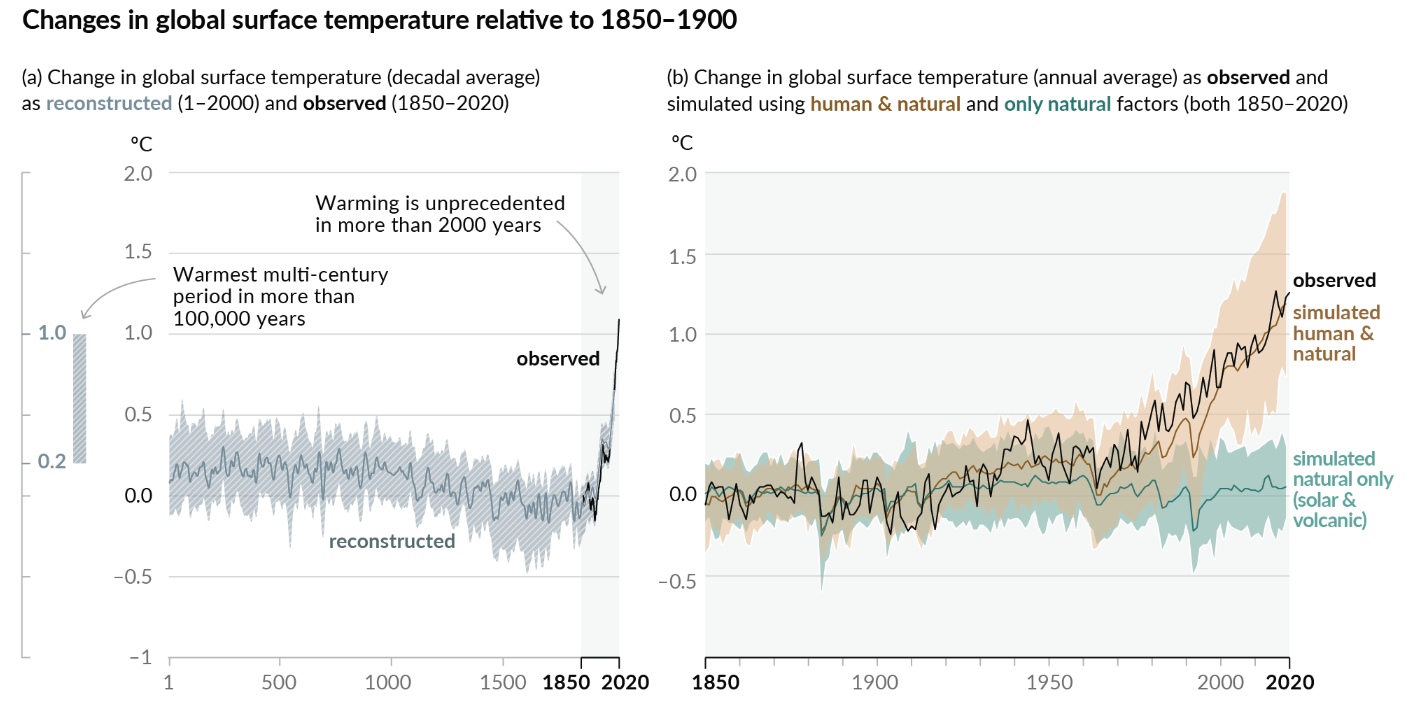
[IMAGE: IPCC AR6 Anthropogenic Climate Change. Caption: While solar activity has declined, temperatures have spiked. Human-produced greenhouse gases are the undeniable driver. This chart shows the direct, linear connection between the carbon we've emitted since the late 1800s and the steady rise in global temperatures. Every ton of carbon we keep in the ground counts toward a more resilient future for our beaches ]
When we burn fuels, we release CO2 (and other greenhouse gases) that trap heat, the "Greenhouse Effect" [EPA, Causes of Climate Change], that would otherwise escape into space. We are trapping more thermal energy than we are releasing, and the ocean is the primary sponge for that excess heat.
Climate change isn't just a future prediction; it’s a present reality. Across the country, we are seeing a spike in the frequency and intensity of extreme weather events that carry a heavy human and economic price [NOAA, 2024: An active year of U.S. billion-dollar weather and climate disasters].
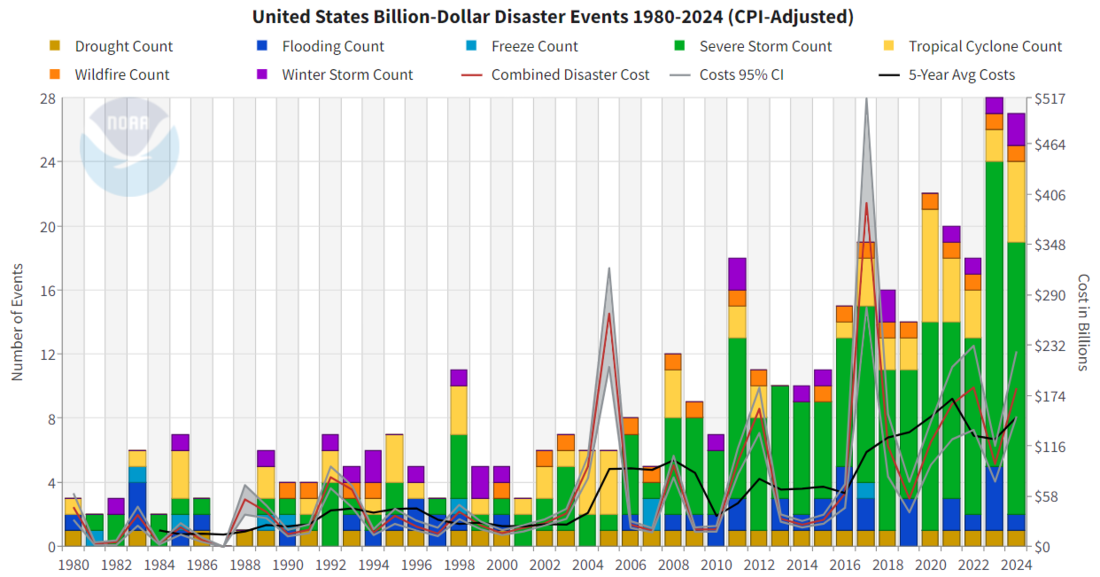
[Image: United States Billion-Dollar Disaster Events 1980–2024. Caption: This data tracks the dramatic increase in billion-dollar weather events over the last four decades. The catastrophe induced by these events cost billions of dollars and are on the rise.]
For Surfrider SLO, this underscores the urgent need to build coastal resilience and transition to clean energy. Climate change impacts more than weather, it impacts all of the ecological systems that contribute to the beautiful nature of our planet.
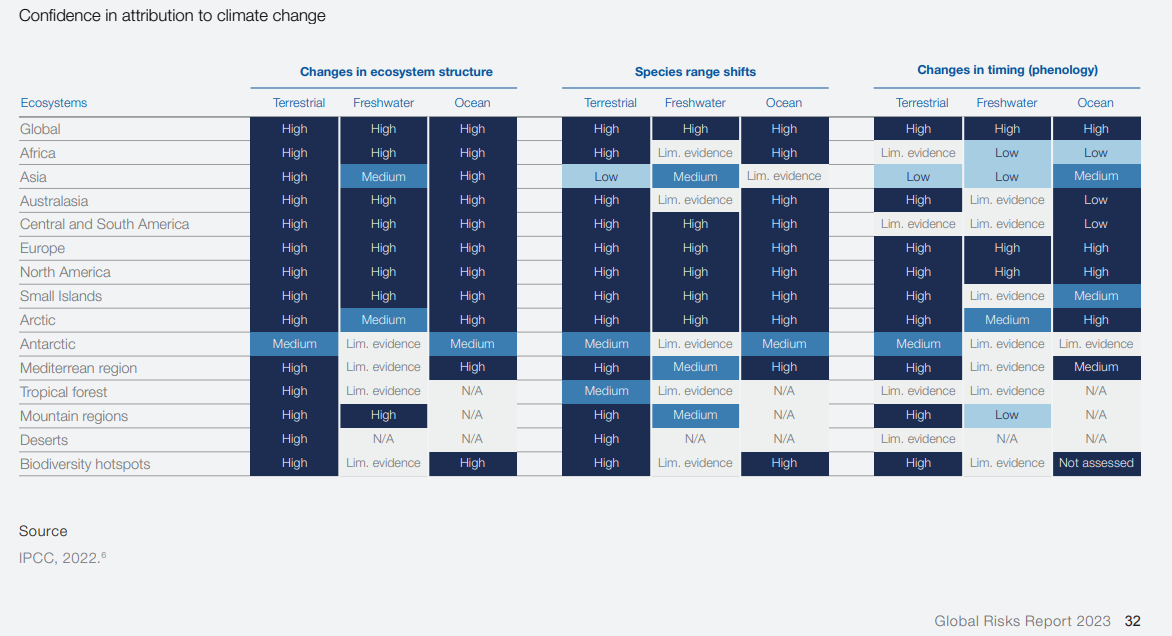
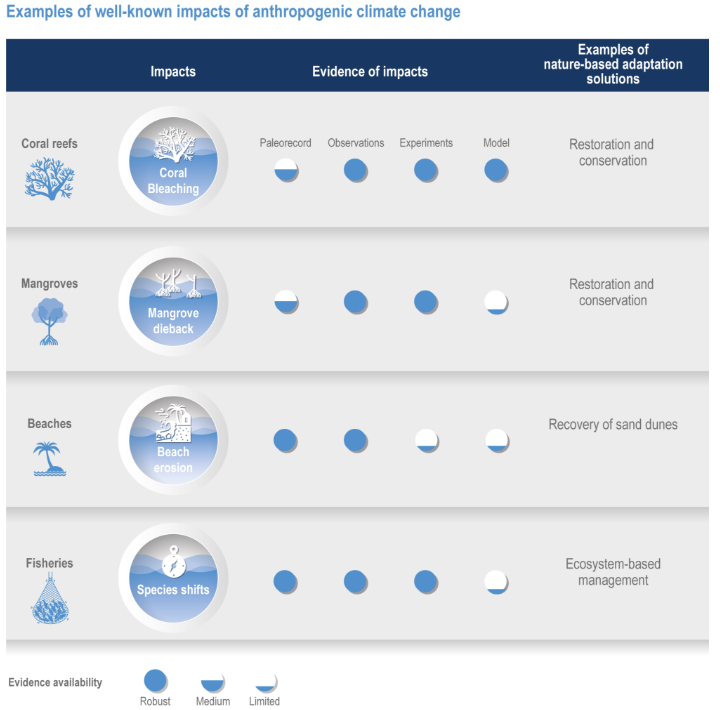
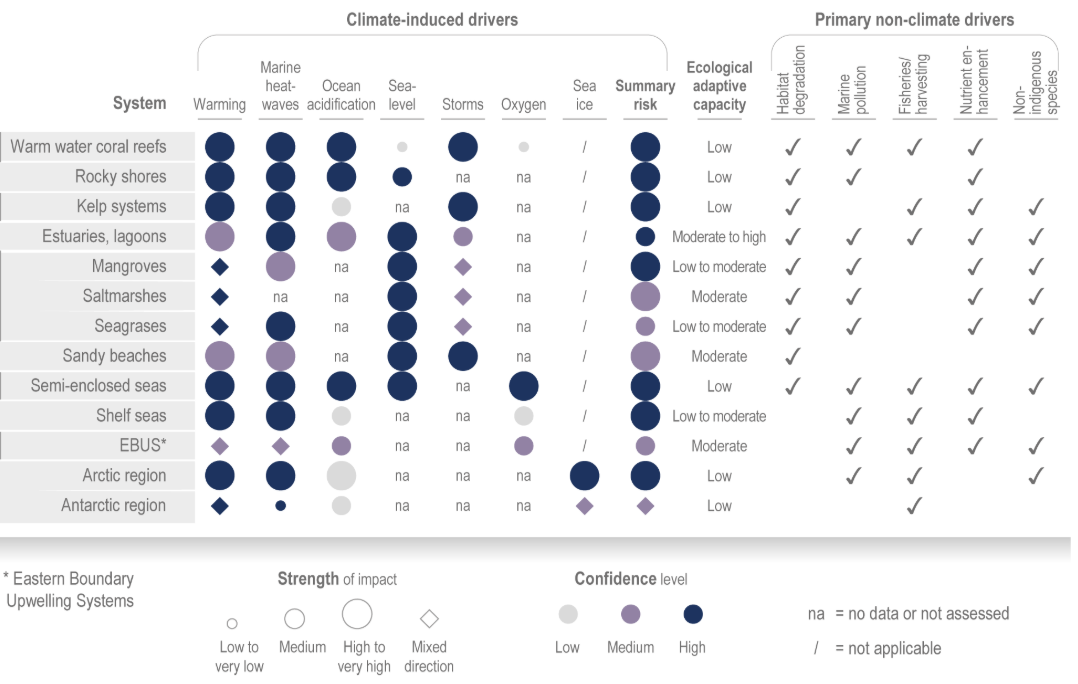
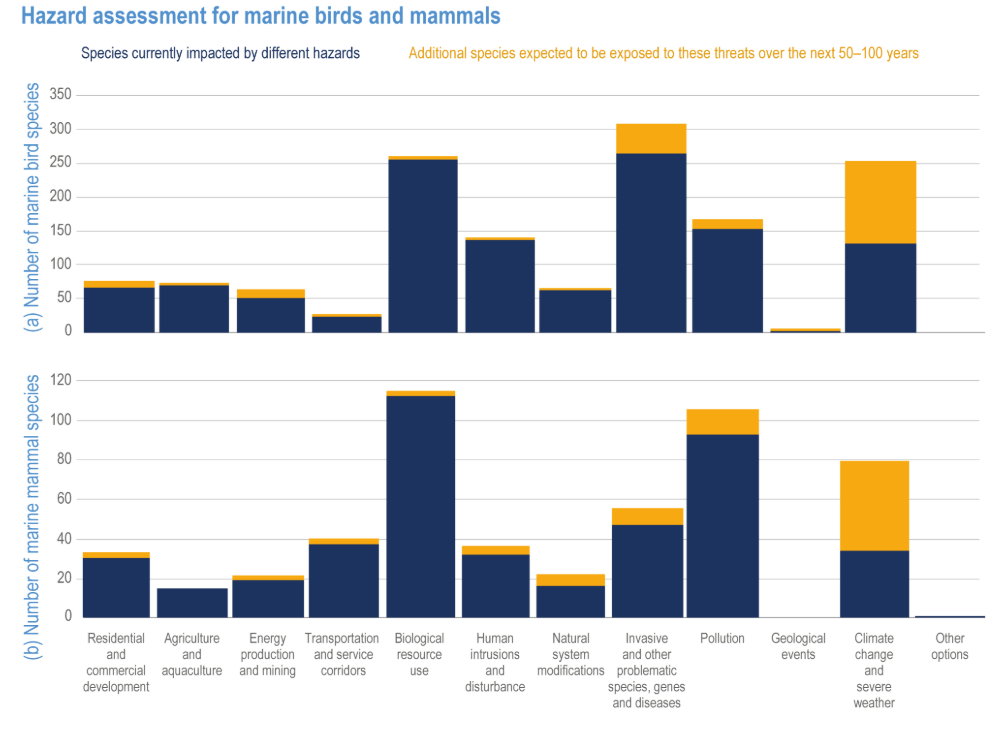
[Image: Impacts of climate change on ecosystems (IPCC). Caption: Scientific evidence shows high confidence that climate change is altering ecosystem structures and species ranges globally. Our local Central Coast species are already on the move as waters warm.]
The state of ecology is connected to far beyond our natural world. It is the life force that drives prosperity and our local marine life, from the kelp forests to the tide pools, is highly sensitive to even minor changes in temperature and chemistry.
Climate Change & The Ocean
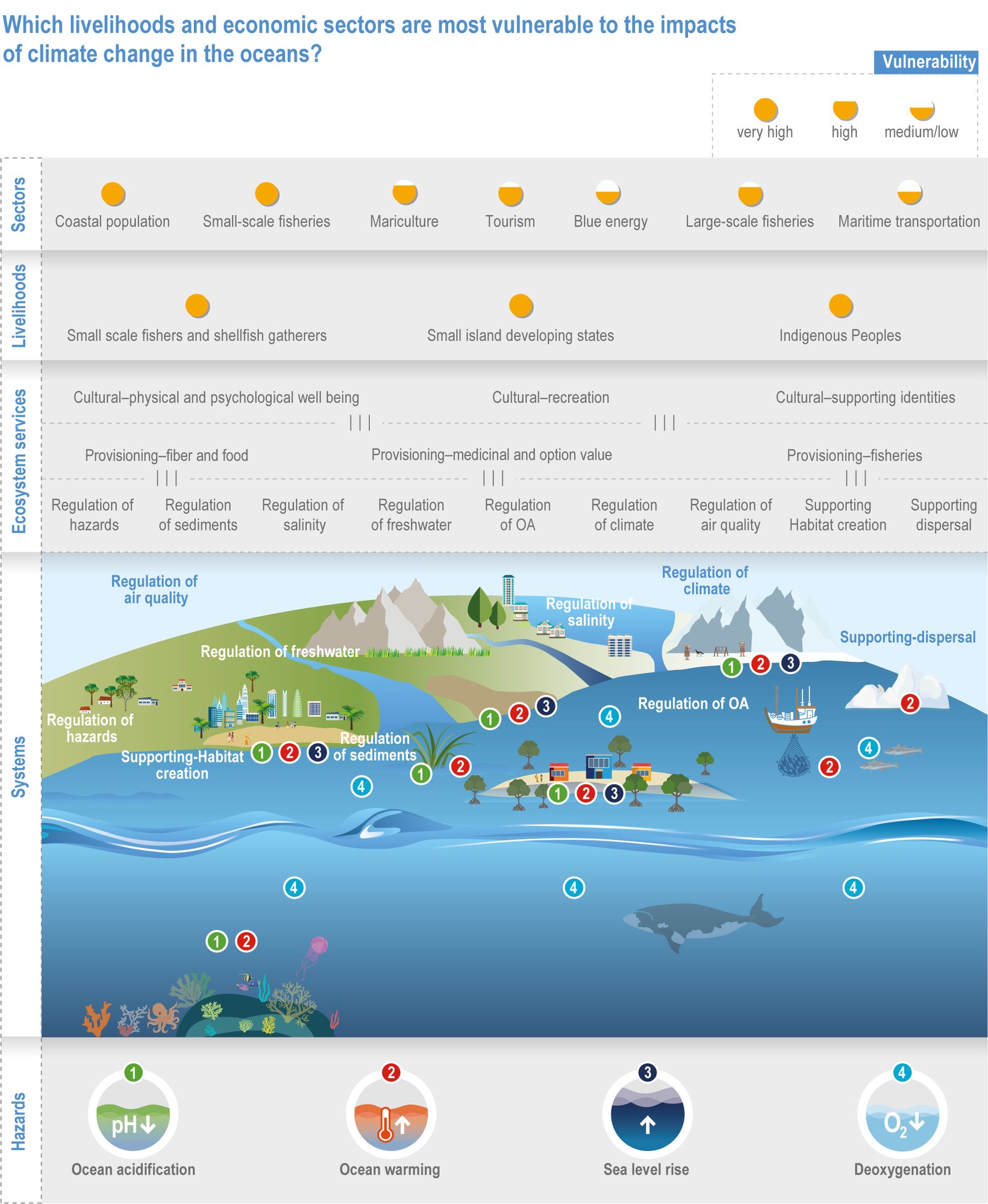
The ocean has been our silent hero, absorbing over 90% of the excess heat and 25% of the carbon dioxide produced by human activity. The ocean has buffered us from the worst impacts of climate change, but that buffer has reached its limit. We are now witnessing a "Triple Threat" that endangers the Central Coast.
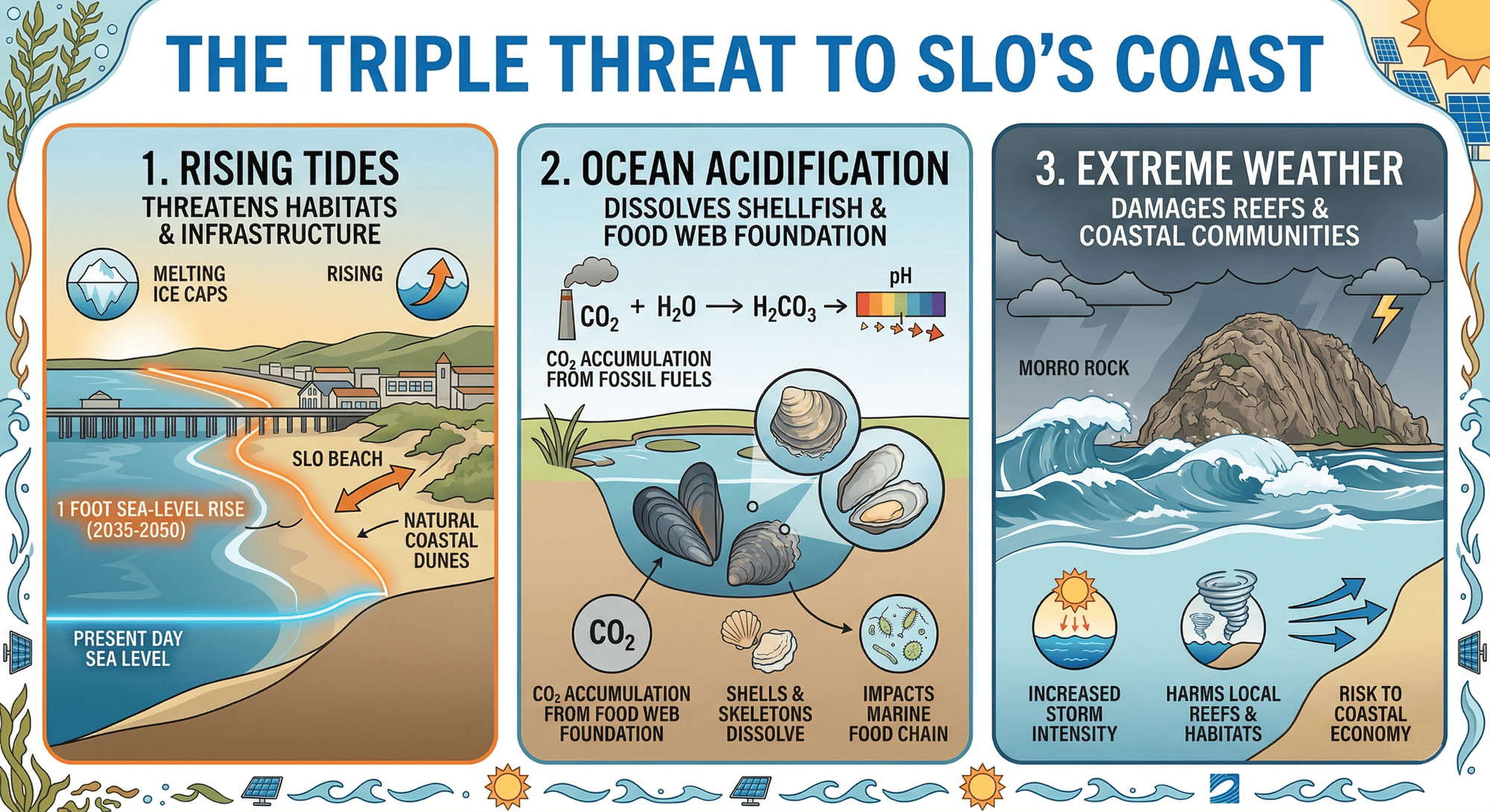
- Sea Level Rise: The Central Coast is projected to see at least one vertical foot of rise by 2035-2050, which could lead to significant beach loss and threaten our iconic surf breaks [NOAA, 2022 Sea Level Rise Technical Report].
- Acidification: As the ocean absorbs CO2, its pH drops. This ocean acidification makes it harder for shell-building organisms like plankton and shellfish to survive [NOAA PMEL, What is Ocean Acidification?].
- Deoxygenation: Warmer water holds less oxygen, leading to dead zones where marine life struggles to breathe [IUCN, Ocean Deoxygenation: Everyone's Problem].
As greenhouse gases trap heat in the atmosphere, much of that heat is absorbed by the ocean. This leads to:
- Marine heatwaves that disrupt ecosystems
- Coral bleaching and loss of reef habitat
- Shifts in fish populations and migration patterns
- Increased harmful algal blooms (which can close beaches)
Warmer water also expands, contributing directly to sea level rise. Sea level rise is driven by:
- Thermal expansion (warming water takes up more space)
- Melting glaciers and ice sheets
Even modest increases in sea level can dramatically accelerate erosion and flooding.
- Global sea levels rose ~20 cm in the 20th century and are accelerating
- Over 50% of beaches worldwide may be at risk by 2100
What this means locally:
- Narrowing or disappearing beaches
- Increased bluff erosion along Highway 1 corridors
- More frequent coastal flooding during king tides
- Loss of public access and surf breaks
This creates a phenomenon known as “coastal squeeze” where beaches are trapped between rising seas and fixed infrastructure like roads, seawalls, and development.
Climate change amplifies natural forces
Climate change is increasing the intensity of coastal hazards:
- Stronger and more frequent storms
- Larger wave energy events
- Compound flooding (storms + high tides + sea level rise)
- Increased coastal infrastructure damage
These impacts affect:
- Coastal homes and roads
- Beach access and recreation
- Local economies dependent on tourism and fisheries
Changing ocean temperatures off California are already altering fisheries, kelp forests, and nearshore ecosystems that define the Central Coast.
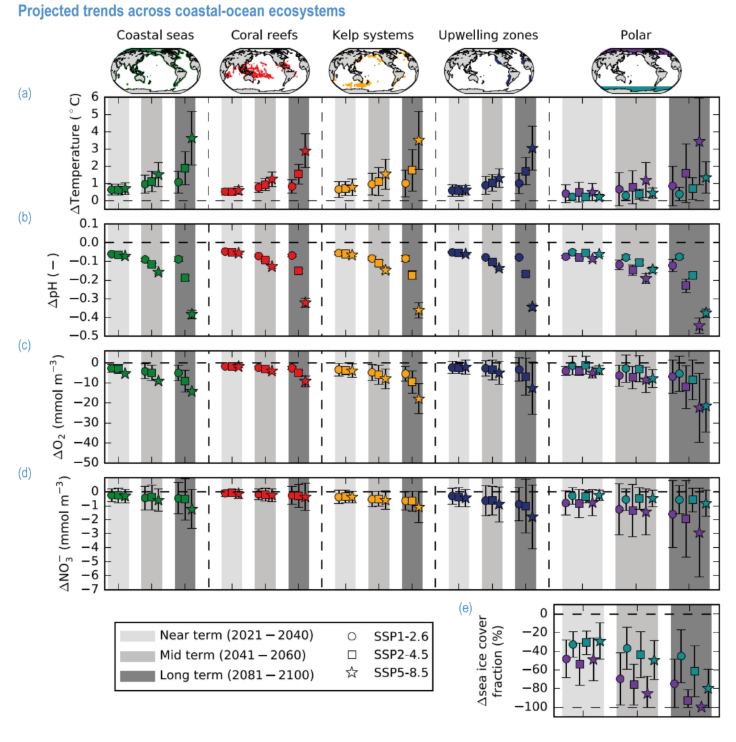
When the ocean absorbs CO₂, it forms carbonic acid, lowering the pH of seawater. This process:
- Reduces the ability of shell-forming organisms (like oysters, mussels, and plankton) to build shells
- Disrupts marine food webs from the bottom up
- Threatens fisheries and biodiversity
The ocean absorbs about one-third of human CO₂ emissions, making acidification a global-scale issue with local impacts.
California’s upwelling systems already bring naturally acidic water to the surface and climate change intensifies this, making the Central Coast a hotspot for acidification impacts.
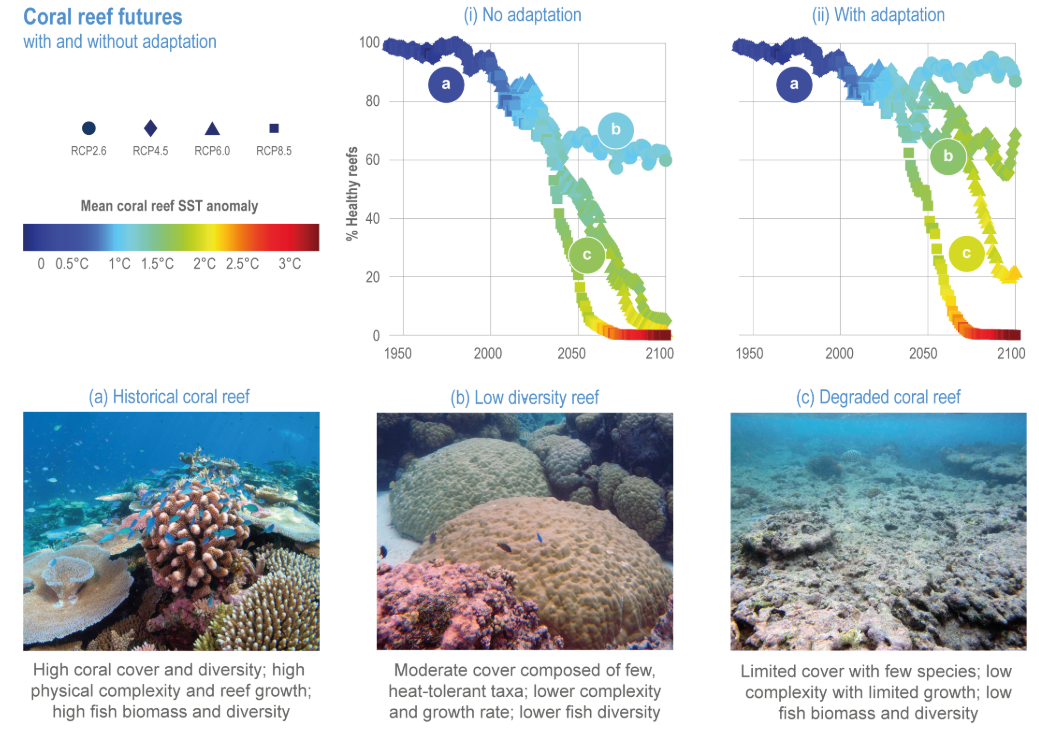
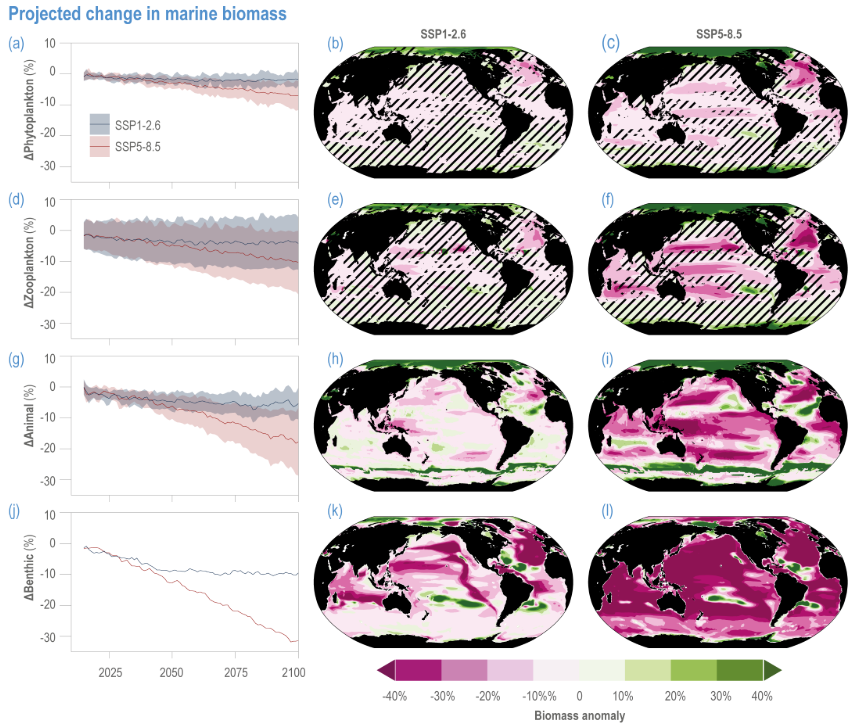
Climate change significantly threatens coral reef and marine life futures, unless we change its course.
The ocean has its own technologies to fight climate change. Coastal ecosystems like our local kelp forests and salt marshes are carbon-sequestering powerhouses, capable of storing up to 10 times more carbon per acre than land-based forests. Protecting these habitats isn't just about conservation; it’s about maintaining a natural carbon sink that defends our shores from rising tides.
- Sequestration: These habitats can store up to 10 times more carbon per acre than land-based forests [UNESCO, Blue Carbon Assets].
- Blue Carbon. This refers to the carbon captured and stored by coastal ecosystems like kelp forests, seagrasses, and salt marshes [NOAA Research, What is Blue Carbon?].
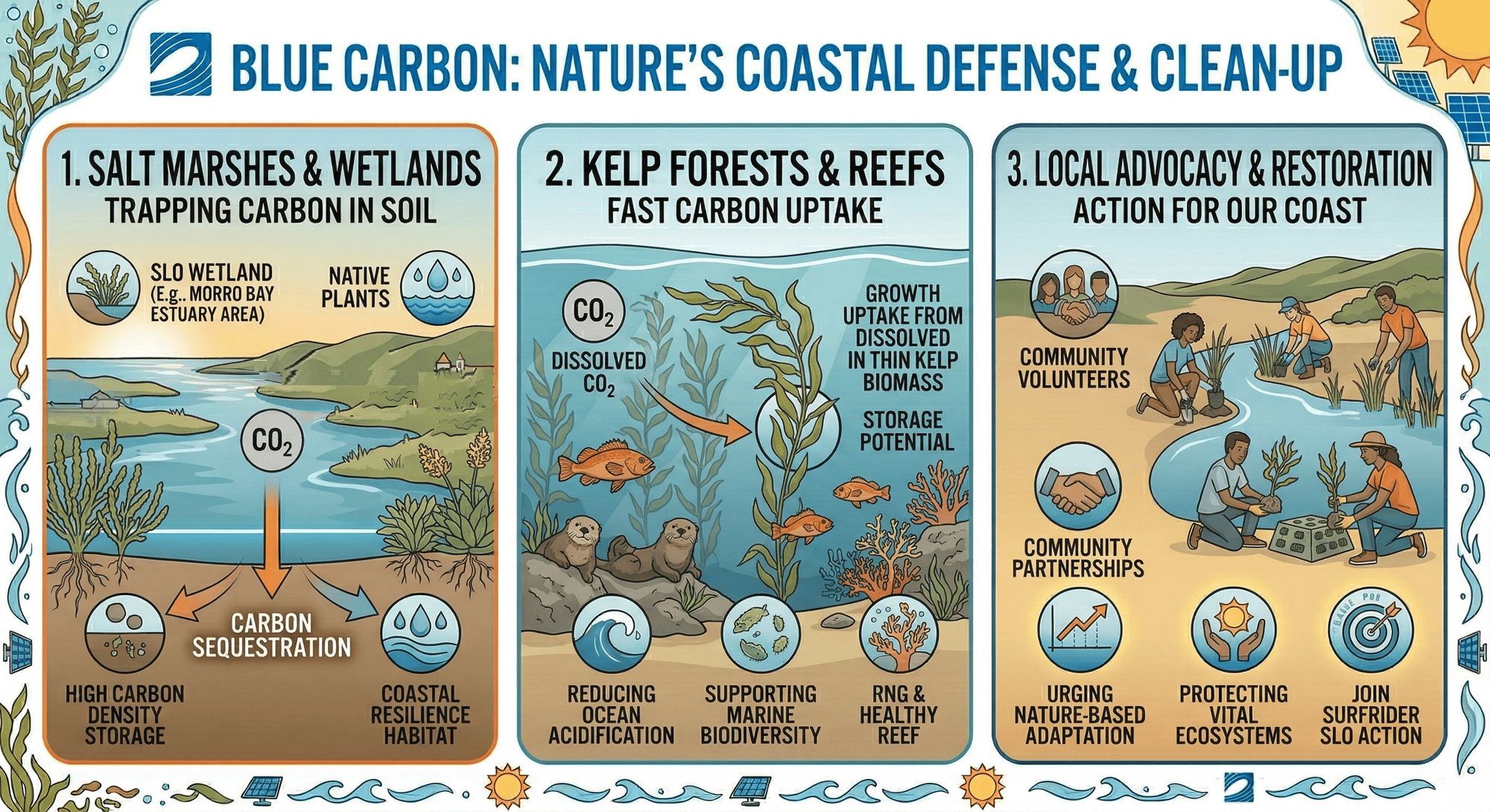
By protecting our local kelp beds, we are building a natural carbon sink right off our shores.
Addressing climate impacts on the ocean requires both mitigation and adaptation.
Reduce the root cause:
- Transition to renewable energy
- Electrify transportation and buildings
- Reduce greenhouse gas emissions at all scales
Adapt responsibly:
- Plan for sea level rise (not react to it)
- Prioritize nature-based solutions (dunes, wetlands)
- Avoid hard armoring that worsens beach loss
- Protect public access and coastal ecosystems
Humanity & Energy: A Global Responsibility
Our energy footprint is shaped by the efficiency of the machines and appliances we use, the design of our buildings and transportation systems, and our own daily habits and consumption choices. The scale and growth of our energy use is a critical part of the conversation about our future, as energy powers everything we do, but the current global system is out of balance.
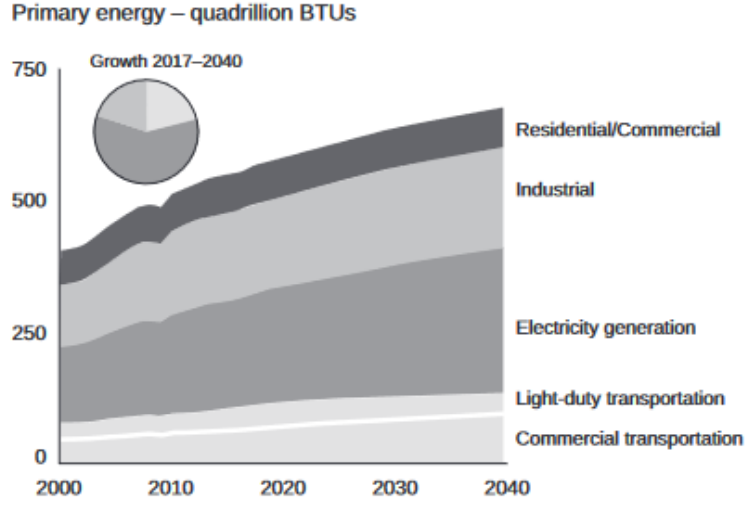
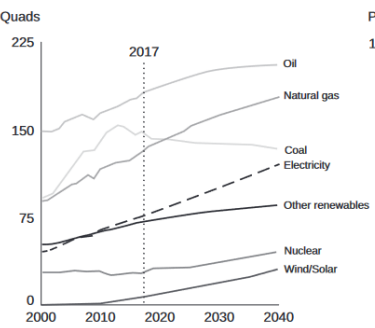
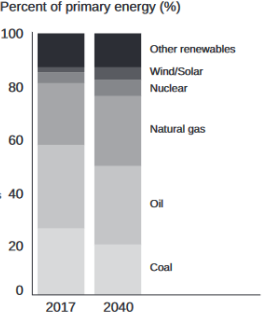
For those of us dedicated to coastal protection, these figures underscore the urgent need to transition toward a more sustainable, efficient energy future to keep our oceans healthy and resilient. While fossil fuel energy production will increase, clean energy percent energy production is on the rise.
[Image: Primary Energy Growth by Sector. Caption: Global energy demand is projected to climb significantly by 2040. Without a shift in our infrastructure, this increased demand translates directly into higher risks for our coastal ecosystems.]
The Disparity: Electricity generation will be the largest and fastest growing sector, primarily reflecting expanding access to reliable electricity in developing countries. While the United States makes up only about 4% of the world’s population, we consume roughly 20% of its primary energy [U.S. Energy Information Administration (EIA), International Energy Outlook].
[Images: Primary Energy by Fuel Source. Caption: While clean energy is finally on the rise, we are still locked into a legacy of oil and gas. Surfrider SLO works to accelerate the electricity line while phasing out the fossil fuels that threaten our shores.]
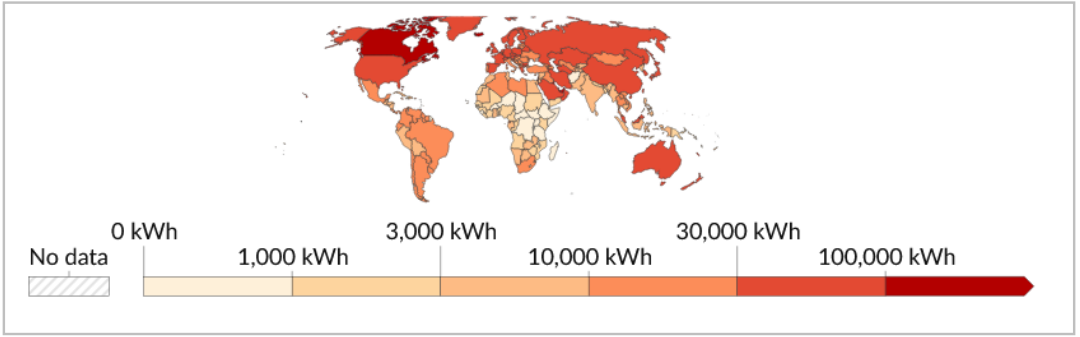
[Image: Global Energy Consumption Map. Caption: Energy use is not shared equally. While the United States makes up only 4% of the world’s population, we consume roughly 20% of its primary energy. This disparity places a unique responsibility on communities like San Luis Obispo to lead by example.]
As developing nations expand access to reliable electricity, the global demand for power will shift. Our role in the Global North is to innovate and export clean technology, ensuring the world’s growth doesn't cost us our climate.
The Economic Link: Historically, societal prosperity has been tied to carbon. As countries lift people out of poverty, energy needs skyrocket. Breaking this link, decoupling prosperity from pollution, is a defining challenge of our generation [IEA, Decoupling Economic Growth from CO2 Emissions].
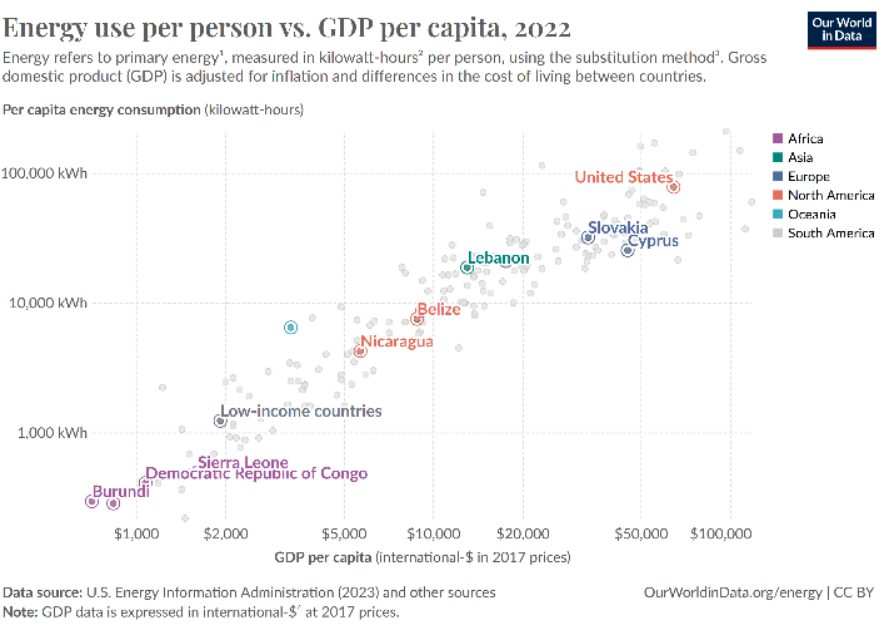
[Image: Energy use per person vs. GDP per capita, 2022. Caption: High-income communities like ours have the greatest responsibility to lead the transition to clean energy.]
For 200 years, energy has been concentrated in fossil fuel pockets, leading to wealth inequality and conflict. The transition to renewables is a democratization of power: moving toward dispersed, available, renewable, and local energy sources [IRENA, The Geopolitics of the Energy Transformation].
Ensuring a sustainable future means more than just swapping fuel sources, it's about equity. Today, over 675 million people, primarily across India and Africa, still lack basic access to electricity and clean cooking tools. At Surfrider, we believe the shift to low-carbon energy must be a just transition, one that uplifts communities and works directly to eradicate poverty while protecting our natural world.
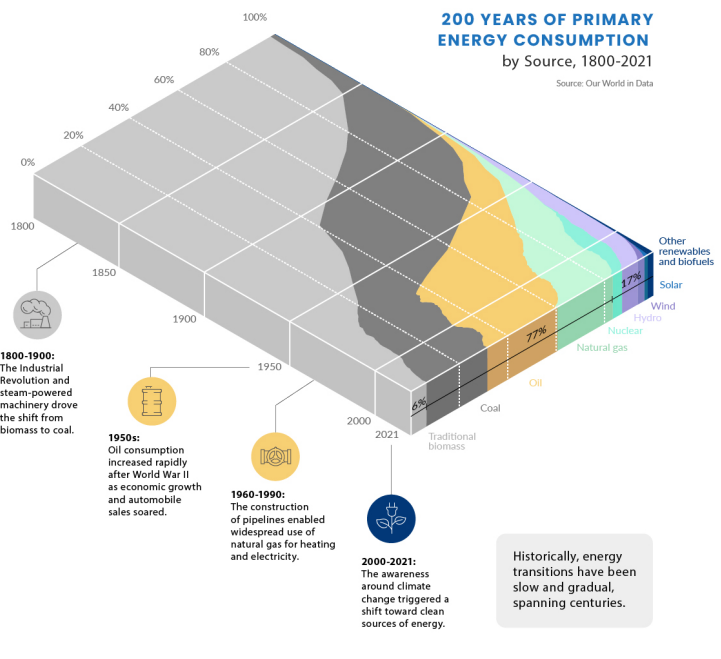
[Image: 200 Years of Primary Energy Consumption by Source. Caption: We are ending the era of extraction and beginning the era of generation.]
Our reliance on the fossil fuel energy has created a carbon debt the Earth can no longer carry. Fossil fuels account for 80% of our primary energy [IEA, World Energy Outlook 2023]. Whether it is the geopolitical volatility of oil or the carbon intensity of coal, the status quo is no longer viable. Energy has always been a powerful force in shaping our world’s history and its conflicts. For over a century, the high energy density of fossil fuels (and the fact that they are only found in a few specific places) has concentrated political power in the hands of a few. By moving toward decentralized, clean energy, we can help shift away from this history of resource-driven conflict and build a more secure, equitable future for our coastal communities and beyond.
Surfrider Perspective: We are ending the era of extraction and beginning the era of generation. Our goal is to move beyond these finite, volatile resources with unjust distribution and toward a future powered by naturally present and replenishing resources: the sun, the wind, and the waves.
The Path Forward: Mitigation & Natural Solutions
Solving the climate crisis requires a two-pronged approach: stopping the damage at the source and healing the Earth's natural systems. Energy transition isn't just a technical swap; it’s a new way of living in balance with the Central Coast environment we love.
Solving the climate crisis requires a two-pronged approach: stopping the damage at the source and healing the Earth's natural systems. Energy transition isn't just a technical swap; it’s a new way of living in balance with the Central Coast environment we love.
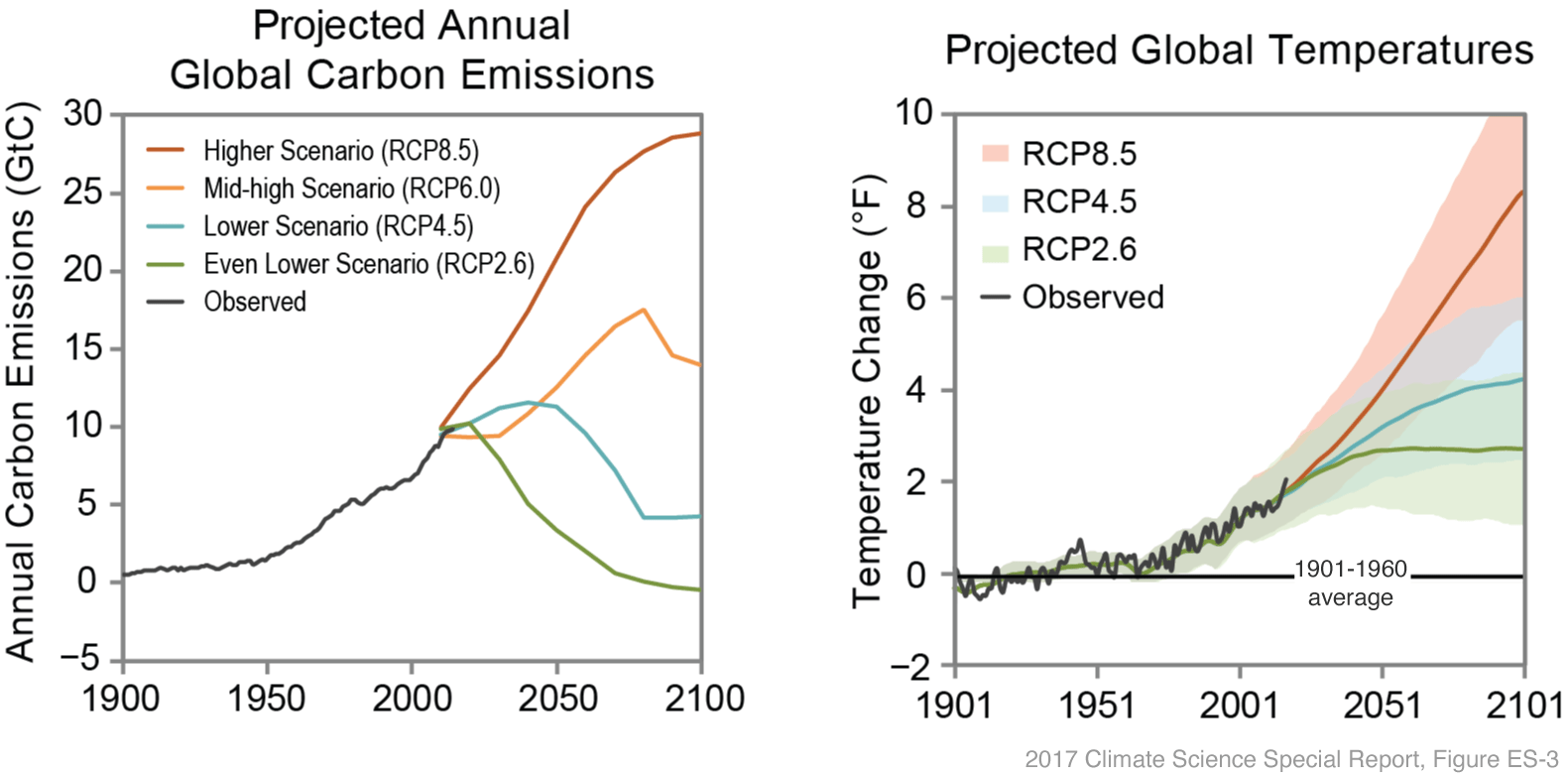
[Image: How to cut global warming emissions in half. Caption: There is no single "silver bullet" for climate change. This chart illustrates how a combination of energy efficiency, switching to renewables, and non-carbon fuels creates the "lower pathway" needed to protect our oceans.]
As the costs of solar and wind continue to plummet, we have a unique opportunity to move away from centralized, volatile fossil fuel systems and toward a decentralized, community-led energy future.
- Lifecycle Thinking: At the San Luis Obispo chapter, we advocate for a full lifecycle analysis of clean energy tools to ensure that as we transition, we truly protect our ocean, waves, and beaches.
- Community Power: Clean energy allows power to be generated locally, keeping energy dollars in our community and reducing the need for massive, high-risk infrastructure.
Clean Energy Technologies
To reach our goals, we rely on a diverse portfolio of technologies that harvest energy without the carbon cost. On the Central Coast, we are uniquely positioned to be a leader in this transition.
- Solar Energy: Solar remains the most accessible path to decarbonization. From residential rooftops to community solar arrays, photovoltaic (PV) technology turns our 280+ days of SLO sunshine into clean electrons. Modern solar panels are now over 20% efficient, and the cost of solar energy has dropped by nearly 90% over the last decade.
- Offshore Wind: Our local waters are home to some of the most consistent and powerful wind resources in the country. Floating offshore wind technology allows us to capture energy far off the coast, beyond our primary surf breaks and viewsheds, while providing a massive source of steady, carbon-free power for the state.
- Geothermal & Tidal: While still developing, these technologies offer the promise of "baseload" renewable power, energy that is available 24/7 regardless of weather conditions.
- A Note on Nuclear: While nuclear energy is not a "renewable" resource like the sun or wind, it is a zero-carbon power source. Nuclear has a role in providing steady baseline power that could eventually transition us toward a 100% clean energy future, provided it is managed with the highest safety and environmental standards and several of its current technological challenges are solved.
The sun doesn't always shine and the wind doesn't always blow at the same time we use the most power, we need a supplemented system.
- Battery Storage: Lithium-ion and emerging long-duration storage technologies (like iron-air or flow batteries) act as the "ocean swell" of the grid, holding energy when production is high and releasing it during the "evening ramp" when demand spikes.
- Smart Grid Modernization: Our current grid was designed for a one-way flow of power. A "Smart Grid" uses digital technology to allow for two-way communication between the utility and the consumer, automatically balancing supply and demand and making our local energy system more resilient to wildfires and extreme heat.
While clean energy tools are a massive improvement for our climate, they still require resources to build and maintain. Our mission at the San Luis Obispo chapter is to ensure that as we transition, we do so with a full lifecycle analysis mindset that truly protects our ocean, waves, and beaches.
Clean Energy Economics
The narrative has shifted: Renewables are no longer just the "ethical" choice, they are the smartest economic choice. Utility-scale solar and wind are now cost-competitive with, or even cheaper than, traditional coal and gas [Lazard, Levelized Cost of Energy Analysis (LCOE 16.0)].
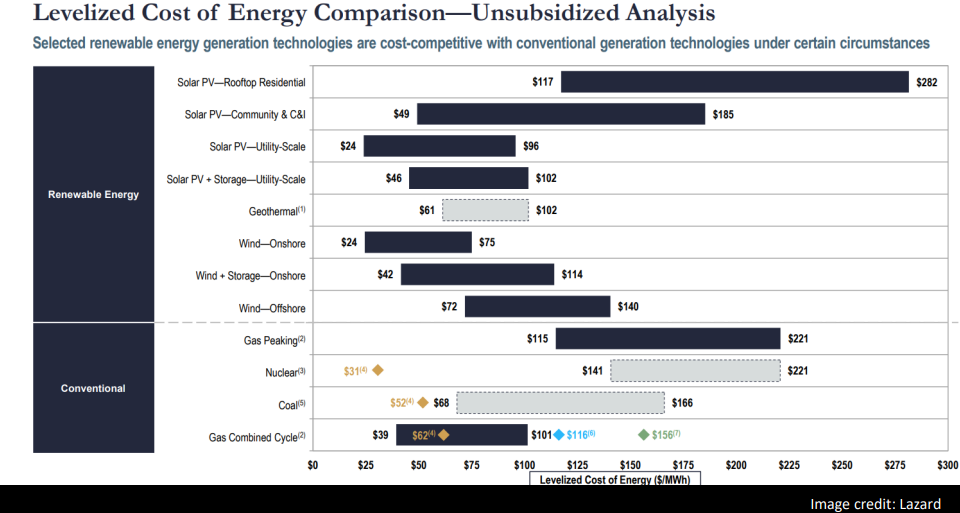
[IMAGE: Levelized Cost of Energy Comparison, Unsubsidized Analysis (Lazard). Caption: The economics have shifted. Clean energy is now the smartest investment for our local economy.]
Clean Energy Advocacy
We have the tools to protect our blue planet; now we need the political will to use them. While global decarbonization is the ultimate destination, the real work happens in our own backyard. By advocating for strong policies and clear regulations, we make clean energy the most attractive and accessible option for everyone in SLO County.
Climate change is a global challenge that requires a localized response. How we adapt and mitigate here in California serves as a blueprint for coastal communities worldwide.
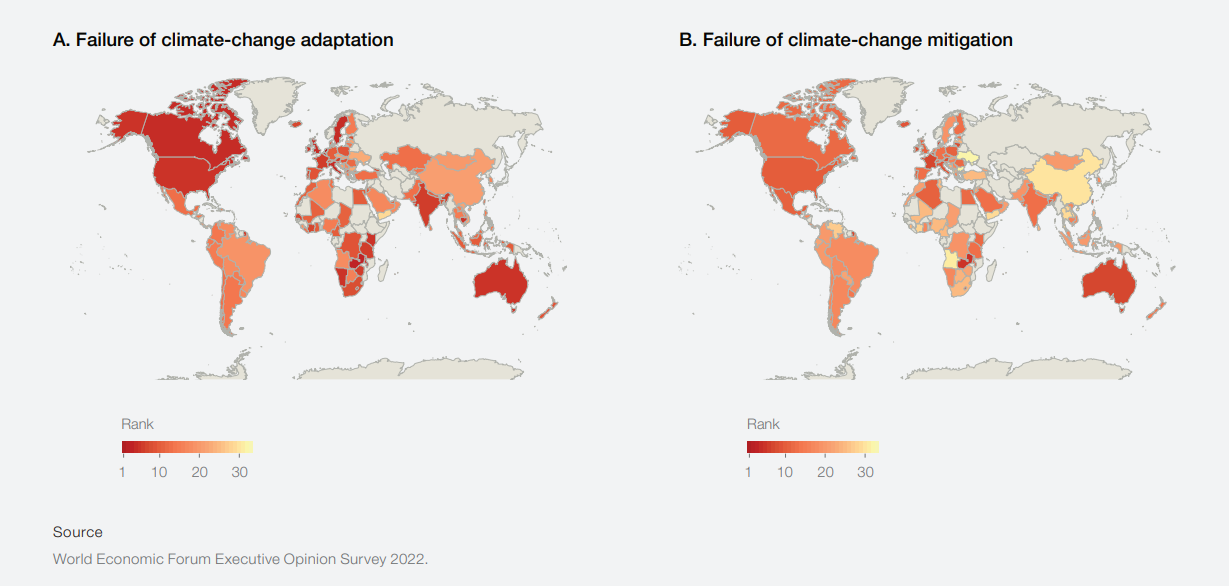
[Image: Failure of climate-change adaptation/mitigation maps. Caption: These maps highlight the areas most at risk from a failure to adapt to and mitigate climate change. As a high-resource community, San Luis Obispo has both the opportunity and the responsibility to lead in climate adaptation.]
National Goals
- The United States has set a target to reach 100% carbon pollution-free electricity by 2035 and a net-zero emissions economy by 2050.
- The federal government has set a bold target to deploy 30 gigawatts (GW) of offshore wind by 2030, enough to power over 10 million homes.
- The federal Justice40 Initiative mandates that 40% of the overall benefits of certain federal climate and clean energy investments flow to disadvantaged communities that have historically borne the brunt of fossil fuel pollution
California Goals
California is a global leader setting the pace for the transition to a carbon-free economy. Our state goals are some of the most aggressive in the world, providing the legal and economic framework for local chapters like Surfrider SLO to push for real change.
Our state goals include:
- SB 100: Achieving 60% of all retail electricity clean by 2030, 100% by 2045.
- Carbon Neutrality: Reaching statewide carbon neutrality by 2045 or sooner.
- Reducing anthropogenic emissions by at least 85% below 1990 levels.
- Utilizing natural solutions (like our local kelp forests and marshes) to sequester the remaining carbon. For the Central Coast, this creates a massive incentive for "Blue Carbon" projects that protect our beaches while helping the state meet its climate targets.
- Nature-Based Solutions: Protecting 30% of our lands and coastal waters by 2030 (the "30x30" initiative).
San Luis Obispo & Central Coast Goals
- SLO City Climate Action Plan: Reaching community-wide carbon neutrality by 2035, one of the most ambitious goals in the nation.
- Responsible Offshore Wind: Ensuring that the Morro Bay Wind Energy Area is developed with the highest environmental standards and includes meaningful input from tribal and fishing communities.
- Regional Resilience: Supporting the transition of the Diablo Canyon lands into a model for conservation and public access as we shift our energy portfolio.
Join the Fight: Advocate with Surfrider SLO
-
Policy doesn't change on its own; it changes because community members like you speak up.
- Stay Informed: Sign up for our action alerts to know when your voice can make the biggest difference for our coast.
- Attend Local Meetings: We represent the ocean's voice at County Board of Supervisors and City Council meetings.
Advocacy is the bridge between a good idea and a healthy ocean. We don't just want a cleaner grid; we want a more just and resilient community.
A Shared Future
Our energy choices have a profound impact on the life support capacity of the Earth, altering our atmosphere, our climate, and the very ecosystems we call home. At Surfrider SLO, we believe that if design and progress have always been about looking forward, they must now also be about looking back. We must reflect on how our past reliance on a prevailing growth economy has impacted our future resilience and the health of generations to come.
To secure a safe, reliable, and low-carbon future, we cannot simply rely on technical fixes. We must alter our social norms and lifestyles, shifting our focus from pure extraction to conservation. Our search for sustainable energy will only bear fruit if we simultaneously work to conserve and regenerate the nature that sustains us.
Addressing the climate crisis implies solving a set of interlinked social, technological, environmental, and economic challenges. By protecting our ocean today, we are choosing a future where both our community and our planet can thrive.
The ocean has always taken care of us. Now, it’s our turn to return the favor.